SCB Chapters and Conservation Policy: Results of 2010 Chapters Policy Survey
A forthcoming article in the SCB newsletter by Cameron Kovach (Chapters Policy Coordinator) and Fiona Nagle (Chapters Representative, Board of Governors) looks at how SCB chapters address conservation policy issues and how they feel their activities should be integrated with those of SCB at the section and global level:
There are approximately 40 Chapters worldwide, collectively representing 500 SCB members and comprised of roughly half professionals and half students. Many of these groups are highly interested in having a voice in public policy. As a multi-level organization, SCB is able to exert its influence at a variety of scales; the Chapters, as the most on-the-ground presence of SCB, are effective tools for bringing the Society’s viewpoint to bear on conservation issues of immediate impact in local and regional areas. For example, the efforts of two U.S. Chapters regarding the 2007 U.S. Farm Bill and the delisting of the Northern Rocky Mountain gray wolf not only brought SCB’s recommendations to local legislators and communities, but led to the North America Section’s official position on these two issues (http://www.conbio.org/Sections/NAmerica/). The Chapter voice, when felt at this most direct level, gives SCB its strongest ability to effect change in local environments, communities, and individuals.
SCB began tracking the policy activity and interest of Chapters in 2006. In 2006 and 2007, roughly two-thirds of active Chapters expressed interest or were engaged in public policy activities. But in 2008-2009, this percentage suddenly dropped to less than one-third, with almost no actual activity occurring. The decrease coincided with the advent of SCB’s internal approvals process for policy position statements. In most cases, the process was perceived to have either directly stifled proposed Chapter activity or proved too uncertain for Chapters to attempt. These challenges were attributable in large part to two misunderstandings of the new process: 1) That Chapters needed Section permission to act (the process provides an alternate avenue for seeking approval from SCB’s global policy committee if Sections do not support a proposal), and 2) That while the formal approval process is relatively quick, the time and consideration needed to develop a sound proposal can take longer and more effort prior to the approval process. This latter case occurs because seemingly simple policy positions often become part of fairly complex policy debates, and SCB is legally obligated to assess closely the ramifications of its policy statements and actions. In 2009 and 2010, the BOG Chapters Representative, SCB Policy Director, and North America Section President worked together to de-bug and clarify the process in order to make approval more transparent, efficient, and fair. While these efforts have aided the Chapters somewhat, open discussions among Chapters and SCB leadership still reveal challenges in enabling greater Chapter engagement in policy.
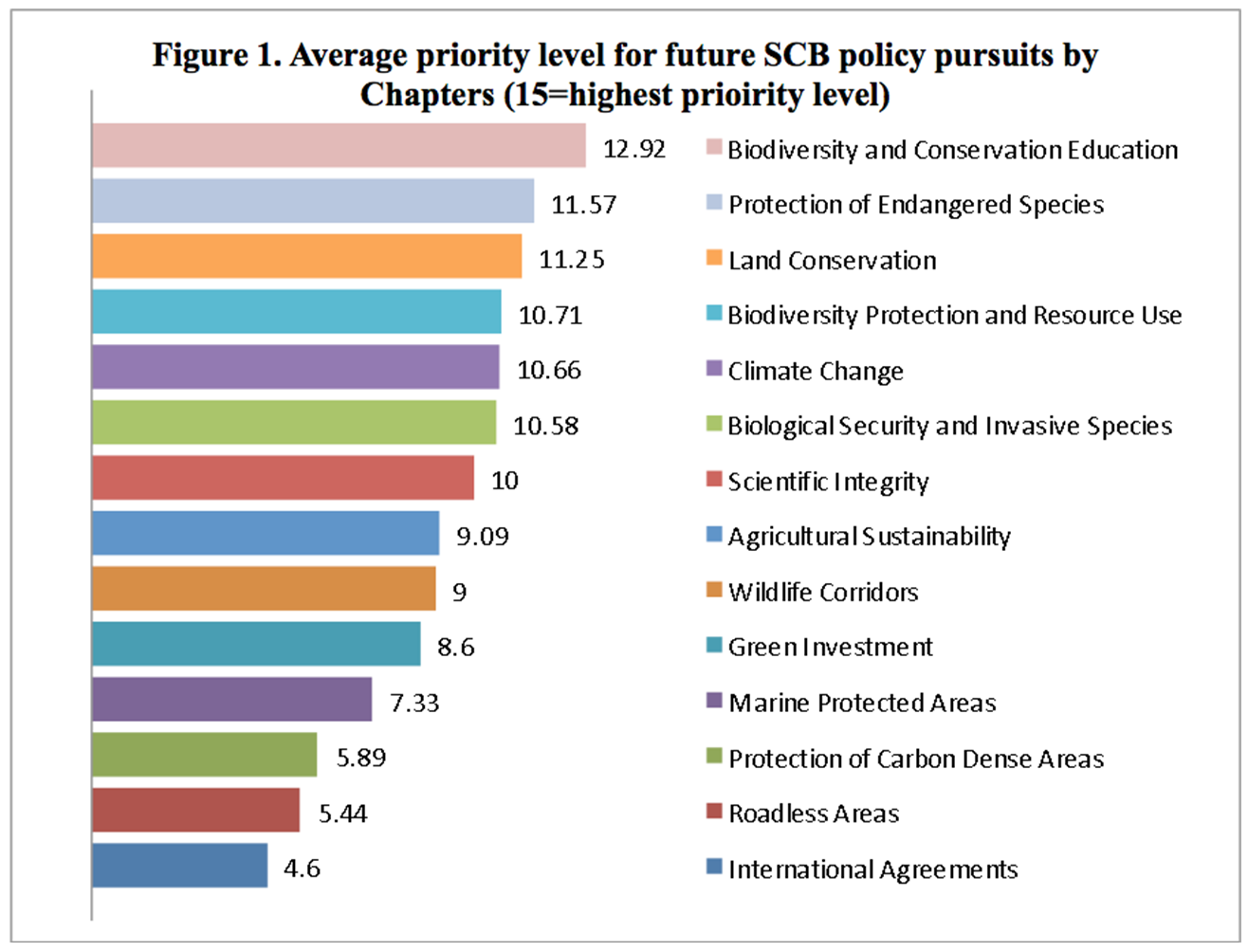
Because SCB has identified having a voice in public policy as one of its primary goals, it behooves us to discover what exactly are the challenges still faced by Chapters and SCB and how we can best address them. Toward that end, the Chapters Committee added the dedicated position of Chapters Policy Coordinator in May 2010. In October 2010, the Chapters Policy Coordinator administered the 2010 SCB Chapters Policy Survey to gauge the interests and challenges of all Chapters. The goal was to gain information that will help the Chapters, Committee, Policy Director, and Sections better coordinate and integrate Chapter efforts. Eighteen of 36 Chapters responded to eight areas of inquiry. Results are summarized below and in Figure 1. The Chapters Committee, in conjunction with the North America Section, SCB Policy Director, and Chapter leadership, plans to use this information to improve policy tools used by Chapters and help guide activities undertaken by Chapters and in Chapter-Section collaborations. Based on the survey results as well as communication with individual Chapters, we believe 2011 holds a promising new role for Chapters in SCB’s policy activities.
A very big thank you to all the Chapters for providing thoughtful responses and feedback on the 2010 Chapters Policy Survey!
Results Overview
With a 50% response rate, Chapters continued to demonstrate their enthusiasm and interest in the policy endeavors of SCB. The Chapters’ thoughtful responses will help SCB identify areas of concern under its current policy priorities and provide a roadmap to potential future policy priorities as identified by the Chapters. The survey will also allow SCB to gauge the interests, ability, and resources of Chapters to pursue future policy endeavors throughout a variety of regions.
With regards to the current SCB policy priorities (climate change, scientific integrity, biological security, international agreements, and green investment), nearly all Chapters have observed related problems in their regions, but expressed particular concern over issues surrounding climate change and biological security. While many Chapters also expressed concern over scientific integrity, they perceived their abilities to be limited in addressing this sensitive topic. Almost all revealed they would like to see an increase in green investment, especially on the local scale, but indicated a low level of importance in pursuing this topic relative to other ecological concerns. Despite several thoughtful answers, nearly every Chapter showed minimal interest in pursuing policy work relating to international agreements because the broad nature of this priority falls outside the local scope of their activities.
In the future, Chapters would like to see SCB’s policy priorities focus on biodiversity and conservation education; protection of endangered species; land conservation; biodiversity protection and resource use; and climate change (Figure 1). Several Chapters expressed the opinion that the current policy priorities represented themes too broad for Chapters to take action and requested narrower priorities that could have a direct impact on the local level. Additional important common themes throughout the survey included the following: the need for better communication between Chapters and SCB’s various Policy Committees and teams; more freedom to address policy concerns at the level unique to a region or Chapter, including a more timely and flexible policy approvals process; educational material on the relationship between science, policy, and SCB’s role; and improved guidance from SCB leadership on how Chapters can make a difference using SCB’s policy tools and in taking action.
The survey received a total of 20 responses from 18 Chapters located in four countries: United States (14), Canada (2), Cuba (1), and New Zealand (1). Of the responses from the United States, 11 states were represented and nearly every region of the country, including the Northeast, Southeast, Midwest, Northwest, West Coast, Southwest, and Southern/Northern borders. The Chapters included approximately 56% professionals and graduate students and 44% undergraduates.